

On the banks of the Vishwamitri River sits the city of Vadodara. Positioned on the fertile plain nestled between the Mahi and Narmada Rivers, the city is known for its abundant banyan (vad) trees. However, during summer, the Vishwamitri River often experiences low water levels, reducing to a mere trickle. This necessitated the need for eco-restoration of water bodies in the city of Vadodara.
Situated on the eastern boundary of Vadodara city is the Sikandarpura village with a total of 2.81 square kilometers. The Sikandarpura lake, named after the village, is a peri-urban water body that plays a vital role in recharging the groundwater of Sikandarpura village.
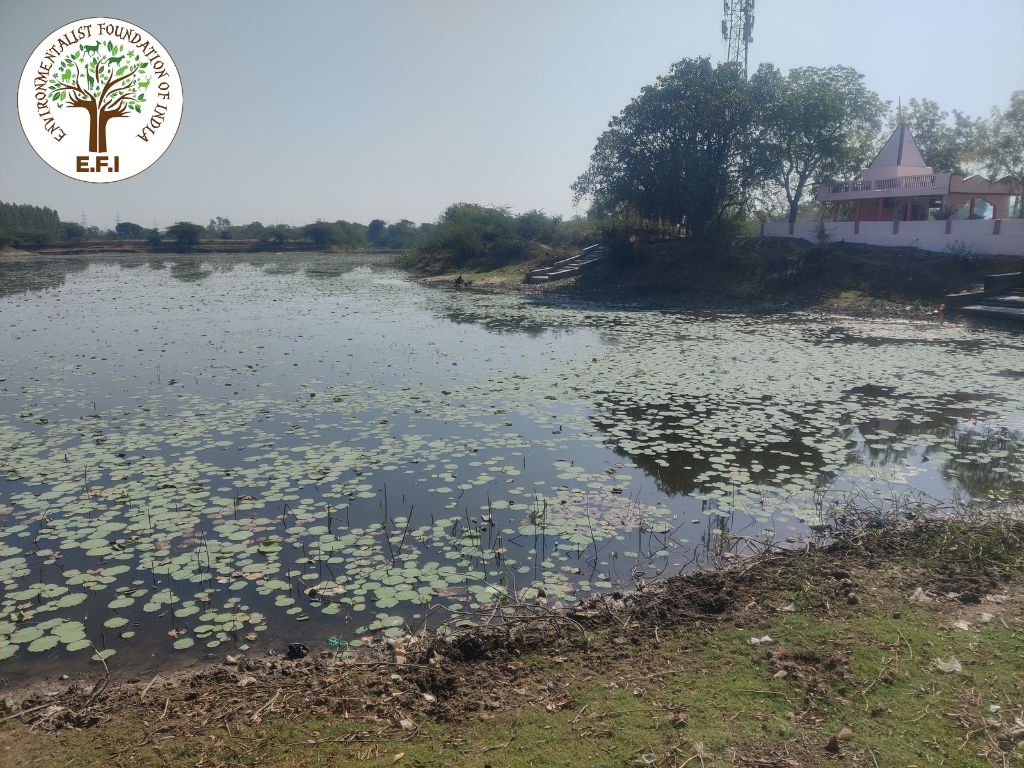
Unfortunately, this 14 acre large lake was infested by invasive weeds such as Parthenium, Castor, Prosopis juliflora and Sky Lotus. Due to an improper water holding structure, excessive silt, nutrient deposit, and encroachment by anthropogenic activity, the lake was in a deteriorating state before being restored by E.F.I. in collaboration from Kotak Mahindra Bank
We thank Gujarat State Government for the administrative support extended
and Kotak Mahindra Bank for funding this Restoration.


The following restoration activities were undertaken to revive the Sikandarpura lake back to its glory. The periphery of the lake was covered with non-biodegradable garbage such as plastic covers, bottles, glass pieces, etc., which were removed to prevent clogging. A total of 3 tonnes of solid waste were cleared from the lake surface.
De-weeding of dried plant matter and invasive weeds such as Parthenium, Castor, Prosopis juliflora and Sky Lotus was carried out to promote the growth of native vegetation. The cleared plant debris was not left to waste but was collected by the villagers for firewood.


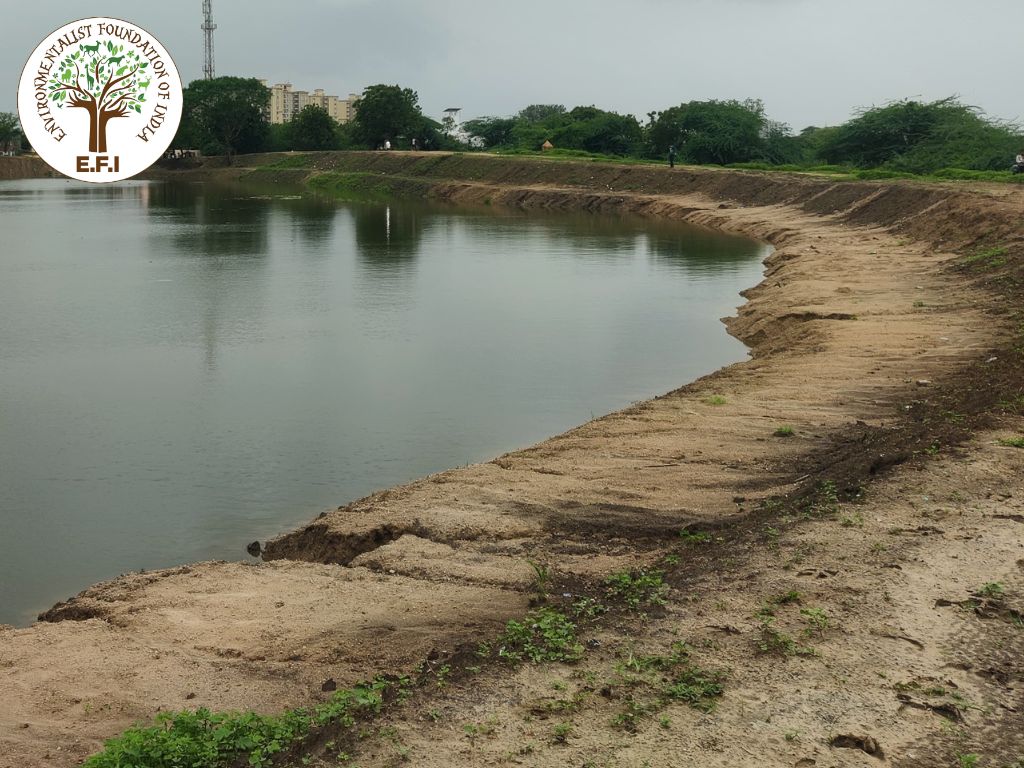
Four acres of peripheral desilting from the available access points was carried out for an average depth of 1.2 m to deepen the lake. The excavated silt was then repurposed to create new bunds and strengthen the existing bunds with primary and secondary embankments. 850 meters of repaired embankments were strengthened and 320 meters of new embankments were created to improve structural integrity and resilience during floods. Outer fencing for a length of 250 meters has been erected to safeguard the lake’s boundary from potential encroachment and to prevent littering.


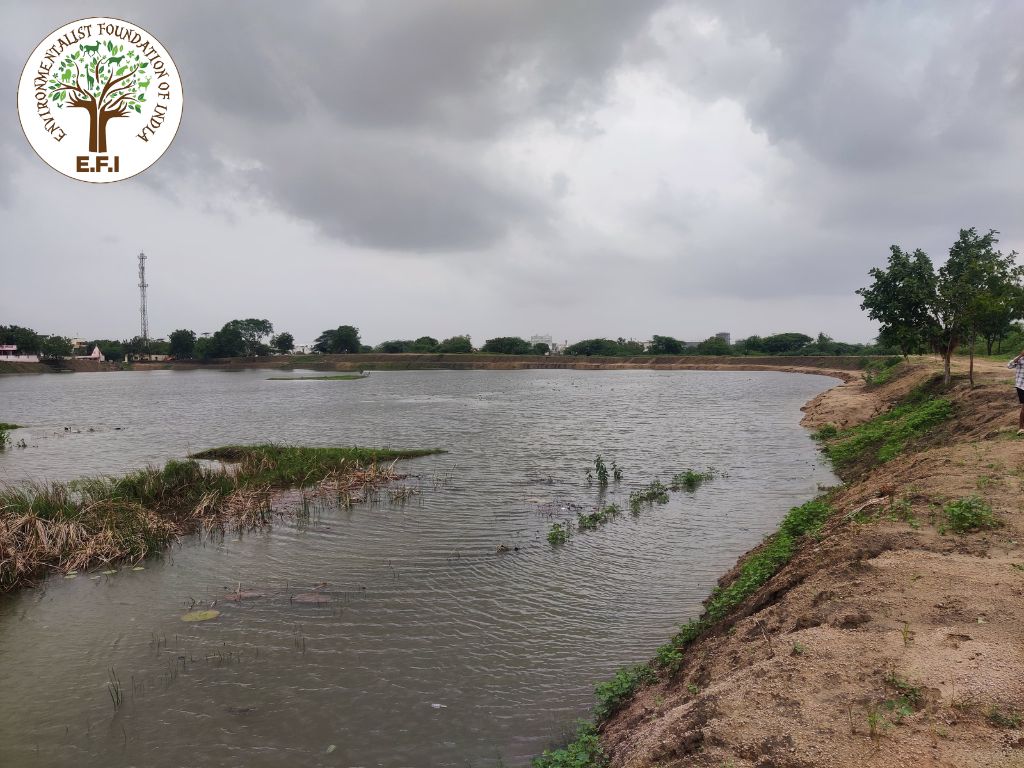
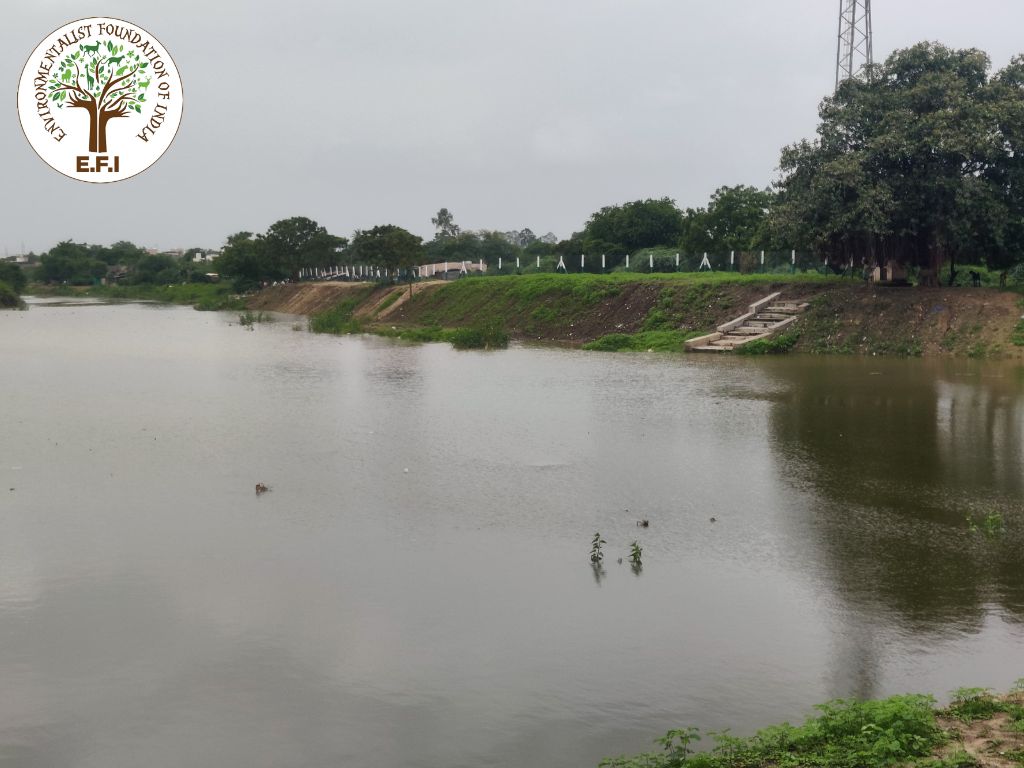
Following E.F.I’s restoration efforts, the lake is clear of invasive weeds with definitive boundaries. The bunds of the lake have been enhanced to combat soil erosion and the lake enjoys more water storage capacity than ever before. Additionally, the Sikandarpura Lake serves as a rainwater collection tank that increases groundwater percolation rate and supports various life forms.


Take a look at the huge transformation of the Sikandarpura Lake:



Watch this space for more lake restoration activities in the future.
Write to us @LakesofIndia and share your lake stories.
Volunteer for India and her Environment with E.F.I
One thought on “Eco-Restoration of Sikandarpura Lake”