

Nestled in the scenic Tumkur region of Karnataka, tranquil waterbodies adorn the picturesque landscape. These vital lakes not only provide water for agriculture and local communities but also serve as serene retreats for leisure and relaxation.
Surrounded by lush greenery and rolling hills, these waterbodies attract diverse wildlife and contribute to the region’s rich biodiversity.
These lakes need focused restoration efforts, with some of them infested by growth of weeds such as water hyacinth while others have inlets draining into the lake that are contaminated with sewage and some lakes in the region are dried due to heavy siltation on the inlets which carries water to these lakes.
The Baddihalli Lake:
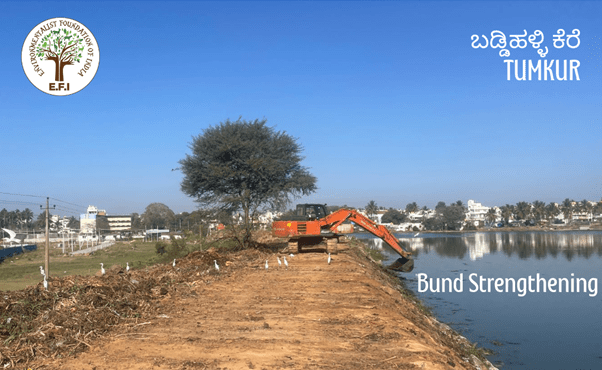
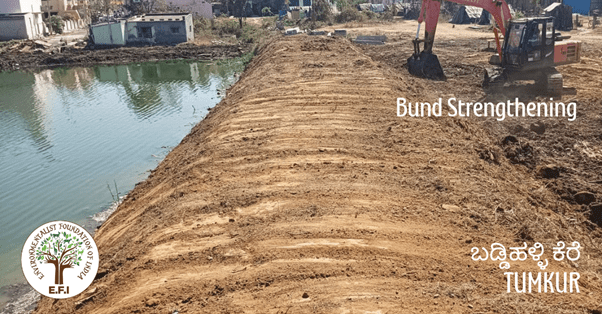
Baddihalli Lake, situated on the outskirts of Tumkur along the Mangalore-Villupuram Highway Road, underwent a restoration initiative by EFI starting in July 2023. This 43-acre water body was heavily infested with invasive weeds like Hyacinth, Bulrush, and other species, which spread rapidly and suffocated the lake by blocking oxygen from entering the water. The excessive sewage entering the lake not only contributed to the proliferation of these weeds but also overexploited groundwater resources in the area. Additionally, the lake’s bund was overrun with Prosopis juliflora, inhibiting the growth of native plants. EFI undertook a comprehensive restoration effort, clearing the entire 43 acres of floating weeds and uprooting the invasive plants from the embankments. Weak offshore embankments were strengthened, compacted, and widened to enhance the lake’s safety, particularly during heavy rainfall. Furthermore, the foreshore bunds were reinforced by adding excessive silt, contributing to the overall stability and ecological health of Baddihalli Lake. This initiative aimed to revitalize the lake’s ecosystem and restore it as a valuable natural asset for the local community and wildlife.
Present Challenges:
Nutrient inflow in the lake:
Continuous sewage inflow from the inlet on the west side and from the residents nearby results in increased levels of Nitrogen and Phosphorous aid resulting in eutrophication and invasive water weeds growth like Hyacinth, Ipomea carnea in the water holding area
Growth of weeds
The growth of invasive land species has been observed around the lake’s periphery. This vegetation not only draws the groundwater from the deep table but also does not allow the beneficial native species to grow by competing with them.
Restoration Methodology
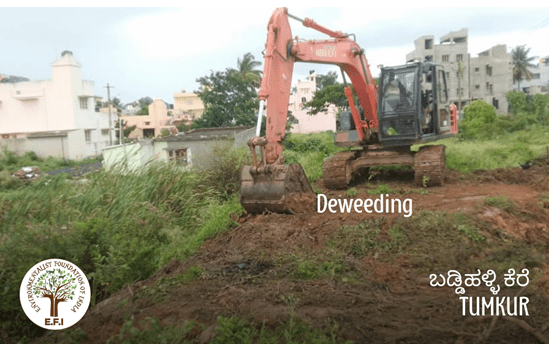
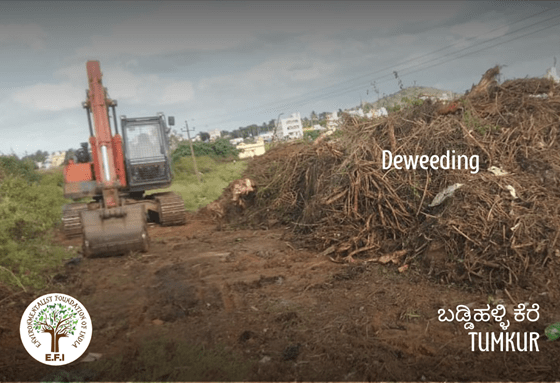
De-weeding
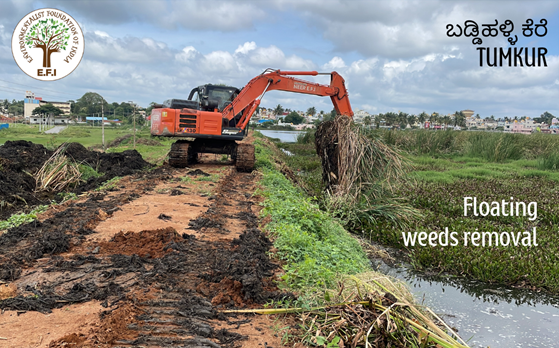
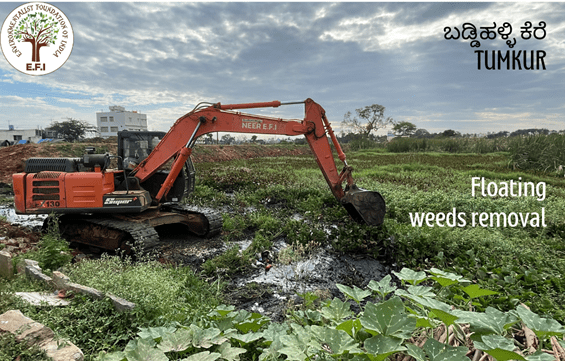
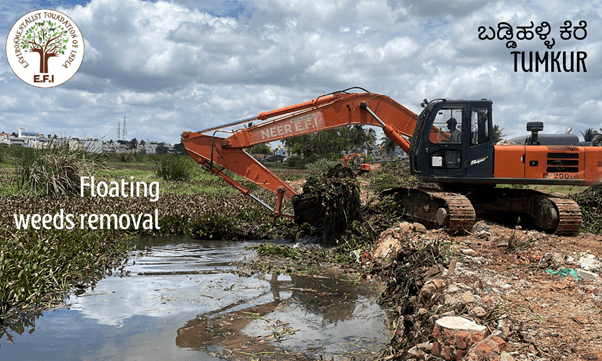
As per the number of weeds growing in the lake, weeds were removed mechanically. The weeds were removed with the roots so that they do not regrow. Weed removal will create ecological balance as this reduces the competition with native plant species.
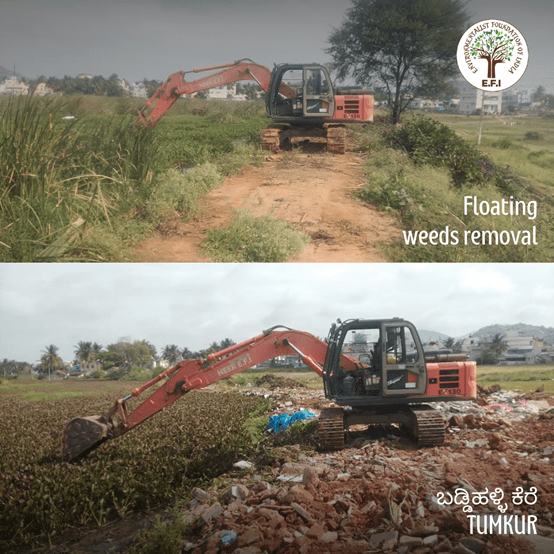
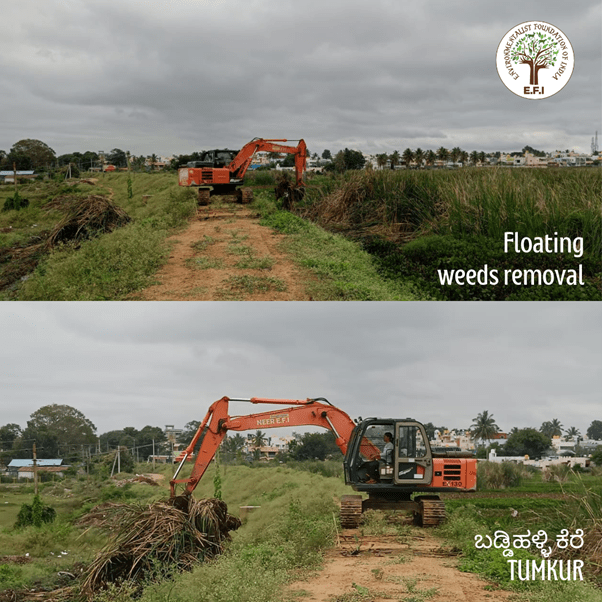
Floating weeds removal :
The removal of hyacinth (an invasive aquatic plant) from water bodies is a crucial undertaking to restore ecological balance and enhance water quality. Additionally, clearing hyacinth allows native aquatic plants to thrive, supporting a healthier ecosystem and preserving biodiversity. Ultimately, it contributes to the overall health and sustainability of aquatic environments

Foreshore Bund compaction
The process of foreshore bund compaction in a lake involves strengthening the embankments along the water’s edge to prevent erosion and enhance stability. This is achieved by compacting the existing soil and adding additional material if needed to reinforce the bund. Compaction ensures that the embankment can withstand water pressure and wave action, particularly during periods of heavy rainfall or flooding and, the risk of bank collapse and subsequent sedimentation into the lake is minimized, promoting the longevity and resilience of the lake’s shoreline ecosystem.
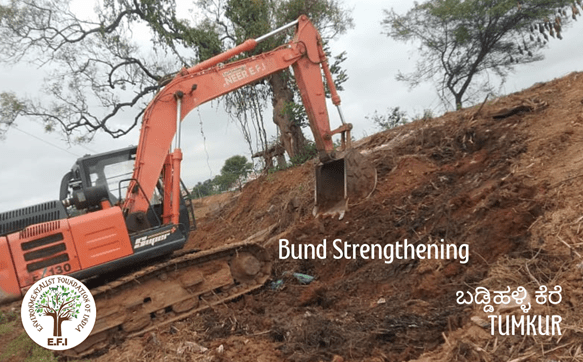
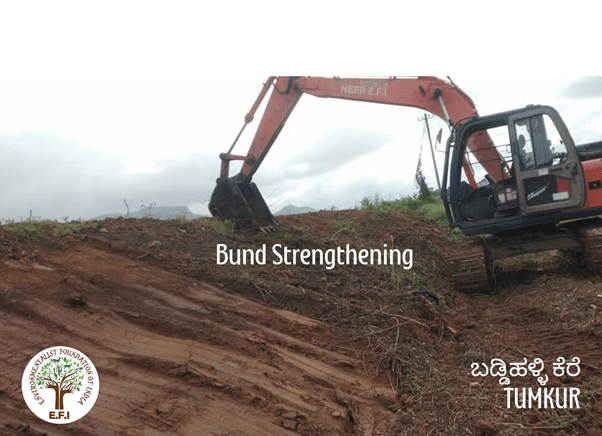
Bund strengthening
The process of bund strengthening in a lake involves to enhance their structural integrity and resilience. The aim is to prevent erosion, stabilize the banks, and protect against water overflow during periods of high rainfall or flooding. Proper bund strengthening helps maintain the lake’s water levels, reduces the risk of embankment failure, and ensures the safety of surrounding communities and ecosystems. This critical process contributes to the long-term sustainability and health of the lake environment.
Check out these before-after comparisons of the lake!


Wonderful efforts and transformation